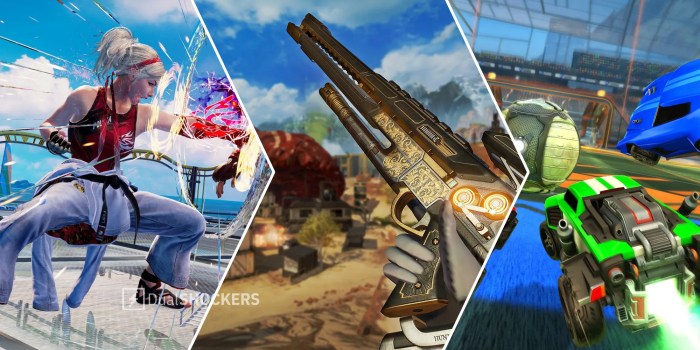
Ready to dive headfirst into the thrilling world of online multiplayer gaming? From epic MMO adventures spanning vast digital landscapes to adrenaline-pumping battle royale showdowns, the possibilities are endless! But with a sea of games vying for your attention, how do you choose the
-best* ones? We’ll explore the criteria that make a multiplayer game truly stand out, examining everything from addictive gameplay and vibrant communities to innovative mechanics and the ever-evolving landscape of game genres.
We’ll journey through the diverse realms of online multiplayer gaming, comparing free-to-play titans with premium experiences, analyzing the unique appeal of different genres (think MOBAs, MMOs, and the ever-popular battle royales), and even exploring how game development itself shapes the online multiplayer experience. Get ready to level up your understanding of the online gaming world!
Defining “Best” Online Multiplayer Games
Defining what constitutes the “best” online multiplayer game is subjective and depends heavily on individual preferences. However, several key criteria consistently emerge when gamers discuss their favorites. A holistic approach considers factors beyond simple popularity, delving into the longevity of the game, its mechanics, and the vibrancy of its community.
Criteria for Defining “Best”
Several factors contribute to a game’s ranking as “best.” Player reviews offer a valuable, albeit sometimes biased, snapshot of the overall experience. A consistently high rating across multiple review platforms suggests a generally positive reception. Longevity is another crucial factor; games that maintain a large and active player base over many years demonstrate enduring appeal and quality. Well-designed gameplay mechanics, including balanced combat, engaging progression systems, and intuitive controls, are essential for a satisfying experience.
Finally, a strong and positive community fosters a welcoming environment and encourages long-term engagement. A toxic or unwelcoming community can significantly detract from even the most technically proficient game.
Genre Comparisons
Online multiplayer games span a wide range of genres, each with its unique strengths and weaknesses. Massively Multiplayer Online Role-Playing Games (MMORPGs) like World of Warcraft offer vast worlds, deep character customization, and extensive storylines, but often require significant time investment. Multiplayer Online Battle Arenas (MOBAs) such as League of Legends and Dota 2 prioritize strategic team combat and quick matches, appealing to players who prefer shorter, more competitive sessions.
Battle Royale games like Fortnite and PUBG focus on large-scale player-versus-player combat with a shrinking play area, emphasizing survival and quick reflexes. Each genre caters to different player preferences, leading to diverse popularity and player bases. While MOBAs might boast a massive competitive scene with professional leagues, MMORPGs often attract players seeking immersive long-term engagement.
Comparison of Popular Online Multiplayer Games
The following table compares five popular online multiplayer games across several key features:
| Game | Genre | Platforms | Price Model |
|---|---|---|---|
| League of Legends | MOBA | PC | Free-to-play |
| Fortnite | Battle Royale | PC, Consoles, Mobile | Free-to-play |
| World of Warcraft | MMORPG | PC | Subscription |
| Counter-Strike: Global Offensive (CS:GO) | First-Person Shooter | PC, Consoles | Free-to-play (with purchasable content) |
| Rocket League | Sports/Arcade | PC, Consoles, Switch | Buy-to-play |
Popular Online Multiplayer Game Genres
The world of online multiplayer gaming is vast and diverse, encompassing a multitude of genres, each with its own unique appeal and dedicated player base. From the adrenaline-pumping thrill of first-person shooters to the strategic depth of massively multiplayer online role-playing games (MMORPGs), the choices are seemingly endless. Understanding the characteristics of these genres helps us appreciate the breadth and evolution of online gaming.The popularity of specific genres often reflects technological advancements, shifting player preferences, and the creative ingenuity of game developers.
We’ll explore some of the most prominent genres, examining their defining features and how they’ve changed over time.
First-Person Shooters (FPS)
First-person shooters have been a cornerstone of online multiplayer gaming since the early days of the internet. Their immersive perspective, fast-paced action, and competitive nature have consistently captivated players. Early FPS titles like
- Quake* and
- Doom* established the foundation, emphasizing twitch reflexes and skillful aiming. The genre evolved with the introduction of more sophisticated mechanics, such as advanced weaponry, diverse maps, and team-based gameplay, as seen in titles like
- Counter-Strike* and
- Call of Duty*. Modern FPS games often incorporate intricate storylines, compelling characters, and advanced graphics technology, pushing the boundaries of realism and immersion. Examples of recent innovations include the battle royale subgenre (e.g.,
- Fortnite*,
- PUBG*) which emphasizes large-scale player interaction and survival.
Massively Multiplayer Online Role-Playing Games (MMORPGs)
MMORPGs provide persistent online worlds where thousands of players can interact simultaneously. Character progression, quest completion, and social interaction are central to the MMORPG experience. Early examples like
- Ultima Online* and
- EverQuest* laid the groundwork for persistent online worlds and player-driven economies. The genre evolved significantly with the arrival of
- World of Warcraft*, which popularized the subscription model and established a high standard for graphical fidelity and content depth. Modern MMORPGs often incorporate intricate storylines, complex character customization options, and large-scale player-versus-player (PvP) combat. Examples of innovative features in recent MMORPGs include seamless open worlds, dynamic events, and a greater emphasis on player agency and choice.
Real-Time Strategy (RTS) Games
RTS games demand strategic thinking, resource management, and quick decision-making. Players control armies or civilizations, building bases, gathering resources, and engaging in combat. Classic titles like
- StarCraft* and
- Command & Conquer* established the core mechanics of the genre. The genre evolved with improved AI, more complex unit interactions, and more intricate strategic depth. Modern RTS games often incorporate 3D graphics, advanced unit customization, and extensive modding communities. The genre also sees continued innovation in mobile platforms and the introduction of elements from other genres.
Multiplayer Online Battle Arenas (MOBAs)
MOBAs, such as
- League of Legends* and
- Dota 2*, emerged from the RTS genre, simplifying gameplay while retaining the strategic depth. They typically involve two teams competing to destroy the opponent’s base, utilizing a roster of unique characters with distinct abilities. The genre’s success stems from its competitive nature, accessibility, and the depth of strategic and tactical decision-making. MOBAs continue to evolve with new heroes, items, and game modes, keeping the gameplay fresh and engaging.
Visual Representation of Game Genres and Subgenres
Imagine a central circle labeled “Online Multiplayer Games.” From this circle, branches extend to represent major genres like FPS, MMORPG, RTS, and MOBA. Each genre branch then further subdivides into smaller branches representing subgenres. For example, the FPS branch could have sub-branches for “Arena Shooters,” “Tactical Shooters,” and “Battle Royale.” Similarly, the MMORPG branch might have sub-branches for “Sandbox MMORPGs,” “Themepark MMORPGs,” and “Massively Multiplayer Online Role-Playing Games.” This visual representation shows the interconnectedness and evolution of different online multiplayer game genres.
The relationships are not strictly hierarchical; some genres overlap and influence each other. For instance, MOBAs have their roots in RTS, while Battle Royale elements have become increasingly prevalent in various other genres.
Free-to-Play vs. Paid Online Multiplayer Games
The world of online multiplayer gaming offers two primary paths to market: free-to-play (F2P) and paid. These models represent fundamentally different approaches to game development, monetization, and player experience, each with its own set of advantages and disadvantages. Understanding these differences is crucial for both players choosing a game and developers designing one.Free-to-play and paid online multiplayer games utilize distinct business models.
Paid games typically involve a one-time purchase for access to the full game experience. Free-to-play games, on the other hand, are free to download and play, but generate revenue through various in-game transactions. This core difference shapes every aspect of the game’s design and the player’s interaction with it.
Free-to-Play Monetization Strategies
Successful free-to-play games employ a range of monetization strategies to generate revenue without directly charging players for access. These strategies often work in concert, creating a multifaceted revenue stream.
Examples include:
- Microtransactions: Small purchases for cosmetic items (skins, outfits), in-game currency, or convenience features (faster progression, inventory expansions). Games like Fortnite and League of Legends exemplify this approach, offering a wide array of cosmetic items that players can purchase to personalize their experience. The revenue generated from these small purchases can be substantial when scaled across a large player base.
- Battle Passes: Time-limited passes offering cosmetic rewards and other bonuses for completing in-game challenges. Call of Duty: Warzone and Apex Legends are prime examples, utilizing battle passes to encourage consistent engagement and provide players with a sense of progression. The revenue model is based on players’ willingness to pay for premium rewards and accelerated progression.
- Loot Boxes/Gacha Mechanics: Randomized virtual item rewards that players can purchase with in-game currency or real money. While controversial due to potential gambling concerns, these systems remain popular in many games, generating significant revenue for developers. However, the design must carefully balance the reward rates to avoid player frustration and maintain ethical considerations.
- Subscription Models (Hybrid): Some free-to-play games offer optional subscriptions for additional benefits, such as exclusive content, increased earning rates, or cosmetic items. This model combines elements of both free-to-play and subscription-based games, offering players flexibility in how they engage with the game.
Advantages and Disadvantages of Free-to-Play Games
Free-to-play games offer several advantages for both players and developers. For players, the most significant benefit is the low barrier to entry. The lack of an upfront cost allows players to try a game before committing financially, potentially leading to a larger and more diverse player base. Developers benefit from potentially massive player numbers, leading to greater revenue generation through microtransactions and other monetization methods.However, free-to-play games also have drawbacks.
The potential for pay-to-win mechanics can create an uneven playing field, frustrating players who choose not to spend money. Aggressive monetization strategies can also negatively impact player enjoyment, leading to feelings of exploitation and frustration. The development process may also be heavily influenced by the need to maximize monetization opportunities, potentially sacrificing core gameplay elements.
Advantages and Disadvantages of Paid Online Multiplayer Games
Paid online multiplayer games offer a different set of advantages and disadvantages. For players, the upfront cost often ensures a more complete and balanced gameplay experience, free from intrusive monetization mechanics. Developers benefit from a guaranteed revenue stream upon purchase, which can allow for more substantial investment in development and long-term support.However, the high barrier to entry can limit the player base, and the lack of ongoing revenue streams can make long-term support and content updates challenging.
The upfront cost may also deter potential players who are hesitant to commit financially without trying the game first. The potential for player churn (players quitting) is also higher if the game doesn’t consistently deliver engaging content and updates.
The Impact of Online Game Development on Multiplayer Experiences
The evolution of online multiplayer gaming is intrinsically linked to advancements in game development technology. From simple text-based MUDs to the graphically stunning and complex online worlds we experience today, the journey reflects a constant push for more immersive, engaging, and technically sophisticated experiences. This progress is driven by powerful game engines, innovative networking solutions, and a relentless pursuit of enhanced security.Game engines and development tools are the foundational elements of online multiplayer game creation.
They provide a framework for developers to build upon, offering pre-built functionalities for graphics rendering, physics simulation, AI, networking, and more. Engines like Unreal Engine and Unity, for instance, provide robust tools specifically designed to handle the complexities of online multiplayer, including features for efficient data synchronization, player management, and matchmaking. These tools drastically reduce development time and allow developers to focus on creating engaging gameplay mechanics and rich game worlds rather than reinventing the wheel for basic functionalities.
Game Engine and Development Tool Functionality in Online Multiplayer Games
Game engines provide a crucial foundation for creating seamless online multiplayer experiences. They handle the complexities of networking, allowing developers to focus on gameplay design. For example, Unity’s built-in networking features simplify the process of synchronizing player positions, actions, and game state across multiple clients. Unreal Engine’s robust networking capabilities, combined with its advanced graphics rendering, are ideal for creating high-fidelity online games with thousands of concurrent players.
Beyond core networking, these engines also offer tools for matchmaking, leaderboards, and in-game chat, streamlining the development process and improving the overall player experience.
Challenges and Innovations in Online Game Development
Creating a truly engaging online multiplayer experience presents significant technical hurdles. Server architecture needs to be scalable and robust to handle a large number of concurrent players without performance degradation. Efficient networking protocols are essential for minimizing latency and ensuring smooth gameplay. Furthermore, robust security measures are critical to protect against cheating, hacking, and denial-of-service attacks. Innovations in these areas have been crucial to the evolution of online multiplayer gaming.
For example, the shift towards cloud-based servers allows for greater scalability and flexibility compared to traditional dedicated servers. Advanced anti-cheat technologies, incorporating machine learning and behavioral analysis, are continuously being developed to combat cheating. Improvements in networking protocols, such as the use of UDP for low-latency communication, are essential for creating responsive and enjoyable gameplay.
Key Technological Advancements in Online Multiplayer Gaming
Several key technological advancements have revolutionized online multiplayer gaming. The development of high-bandwidth internet access has been fundamental, enabling smoother gameplay and the support of richer, more detailed game worlds. The widespread adoption of cloud computing has enabled greater scalability and accessibility for online games, allowing developers to easily manage a large number of players. Advances in cryptography and security protocols have made online games more secure, mitigating risks of cheating and hacking.
Furthermore, the evolution of game engines and development tools, as mentioned previously, has dramatically simplified the process of creating sophisticated online multiplayer games, leading to a wider variety of experiences. Finally, the rise of dedicated game servers and improved networking technologies have significantly reduced lag and improved overall gameplay responsiveness. For example, the implementation of technologies like KCP (Quick UDP Internet Connection) in games like PUBG Mobile has significantly improved the stability and responsiveness of online gameplay, even in areas with high latency.
Online Games Tailored to Specific Audiences
The gaming world, once considered a predominantly male domain, has seen a significant surge in female participation. This shift has spurred the development of online multiplayer games specifically designed to resonate with female players, addressing their preferences and interests. These games often move beyond traditional action-heavy titles, incorporating elements of social interaction, narrative depth, and character customization that appeal to a broader audience.
Understanding the design choices that make a game appealing to a female audience is crucial for developers. It’s not simply about adding pink hues or sparkly effects; it’s about creating immersive experiences with compelling narratives, strong female characters, and opportunities for meaningful social interaction. Games that foster collaboration and community building, rather than solely focusing on competition, often prove particularly successful with female players.
Popular Online Multiplayer Games Catering to Female Players
Many popular online games, while not exclusively designed for women, have attracted a large female player base due to their features and themes. These games often prioritize social interaction, crafting, and narrative-driven gameplay over intense, competitive action.
Examples include games like Animal Crossing: New Horizons, known for its charming aesthetic and focus on community building and customization. Stardew Valley offers a similar relaxing experience with farming, relationship building, and exploration. Even games like Roblox, with its vast library of user-created content, attract a substantial female audience due to its creative and social aspects. The diverse range of experiences within these games allows for a personalized approach to gameplay, a key factor in their appeal.
Examples of Games with Strong Female Characters and Storylines
Strong female characters are not just a trend; they are a crucial element in making games appealing to a wider audience, including women. Games that feature complex, relatable, and powerful female leads often receive significant praise and attract diverse players.
Horizon Zero Dawn and its sequel, Horizon Forbidden West, are prime examples. Aloy, the protagonist, is a skilled hunter and resourceful survivor in a post-apocalyptic world, showcasing strength, intelligence, and determination. Similarly, games like The Last of Us Part II, while controversial, feature a compelling female protagonist, Ellie, whose journey explores themes of resilience, trauma, and revenge. These games not only provide engaging storylines but also showcase diverse female characters beyond stereotypical tropes.
Design Choices Appealing to a Female Audience
Successful games that cater to a female audience frequently incorporate design choices that go beyond superficial aesthetics.
These choices often include: A strong emphasis on narrative and character development, allowing players to connect emotionally with the characters and their stories; Collaborative gameplay that fosters community and social interaction, rather than focusing solely on competitive elements; Extensive customization options for characters and environments, enabling players to express their individuality; A less violent or overtly aggressive gameplay experience, focusing instead on exploration, puzzle-solving, or creative activities; and a positive and inclusive online community that actively discourages harassment and toxicity.
These features create a more welcoming and enjoyable environment for all players, regardless of gender.
The World of Online Casino Games (Separate Section due to different nature)

The rise of online casinos has transformed the gambling landscape, offering a vast array of games and convenient access to players worldwide. However, this accessibility necessitates a clear understanding of responsible gaming practices and the legal framework governing this industry. This section delves into the world of online casino games, exploring their mechanics, regulations, and the crucial aspects of responsible gambling.Online casinos provide a diverse range of games, each with its own set of rules and probabilities.
Understanding these mechanics is key to informed and responsible play. Furthermore, the regulatory landscape varies significantly across jurisdictions, influencing the legality and accessibility of online gambling. Finally, the role of affiliates and bonus structures, such as free spins, significantly impact the player experience and the overall industry dynamics.
Responsible Gambling Practices and Resources
Responsible gambling emphasizes playing for entertainment, not as a means to make money. It involves setting limits on spending and time, recognizing the signs of problem gambling, and utilizing available resources for help. Numerous organizations offer support and resources for individuals struggling with gambling addiction, including Gamblers Anonymous and the National Council on Problem Gambling. These organizations provide confidential helplines, online resources, and support groups to help individuals manage their gambling habits.
Responsible gambling also includes understanding the odds of the games and making informed decisions about how much to wager.
Regulations Surrounding Online Gambling
The legality of online gambling varies significantly depending on the jurisdiction. Some countries have fully legalized and regulated online casinos, while others have completely prohibited them. Many jurisdictions fall somewhere in between, with varying degrees of regulation and licensing requirements. For example, the United Kingdom has a robust regulatory framework overseen by the Gambling Commission, ensuring fair play and player protection.
In contrast, some countries in Asia have strict prohibitions on all forms of online gambling. Understanding the specific laws in one’s location is crucial before engaging in online casino games.
Types of Online Casino Games and Their Mechanics
Online casinos offer a wide variety of games, including slots, table games (like blackjack, roulette, and baccarat), video poker, and live dealer games. Slots rely on random number generators (RNGs) to determine outcomes, offering various themes, paylines, and bonus features. Table games involve strategic decision-making and interaction with either a computer program or a live dealer. Video poker combines elements of poker and slots, requiring skill and strategy.
Live dealer games offer a more immersive experience, streaming live gameplay from a real casino environment. Each game type has unique mechanics and probabilities that players should understand before participating.
Online Casino Affiliates and Their Role
Online casino affiliates act as marketers, driving traffic to online casinos in exchange for a commission on player deposits or revenue generated. They utilize various marketing strategies, including search engine optimization (), social media marketing, and content marketing, to attract potential players. Affiliates play a significant role in the online casino industry, contributing to the overall visibility and reach of online gambling platforms.
Their marketing efforts often influence player choices and the competitiveness within the online casino market.
Online Casino Free Spins Bonuses and Their Impact
Free spins bonuses are a common promotional tool used by online casinos to attract and retain players. These bonuses typically award a set number of spins on specific slot games, allowing players to try the games without risking their own money. Free spins can significantly enhance player engagement by offering a risk-free opportunity to experience new games or win real money.
The terms and conditions of free spins bonuses, such as wagering requirements and game restrictions, should be carefully reviewed before claiming them.
Potential Risks and Rewards Associated with Online Casino Gambling
Understanding the potential risks and rewards is crucial for responsible gambling.
- Risks: Addiction, financial loss, emotional distress, legal consequences (depending on jurisdiction), security risks (data breaches, scams).
- Rewards: Entertainment, potential for winnings, convenience, access to a wide variety of games, social interaction (in some games).
Ultimate Conclusion
So, whether you’re a seasoned veteran or a curious newcomer, the world of online multiplayer gaming offers something for everyone. From the strategic depths of MOBAs to the thrilling chaos of battle royales, the key is to find the perfect game that fits your style and preferences. Remember to consider factors like community, gameplay mechanics, and the overall experience when making your choice.
Now go forth, brave gamer, and conquer the digital realms!
Questions and Answers
What are the system requirements for most online multiplayer games?
System requirements vary wildly depending on the game. Generally, expect a reasonably modern computer or console with a decent internet connection. Check the game’s official website for specific requirements.
How do I choose a game that’s right for me?
Consider your preferred game genres (RPG, FPS, strategy, etc.), your preferred play style (competitive, cooperative, casual), and the amount of time you’re willing to invest. Read reviews and watch gameplay videos to get a feel for different games.
Are there games with strong storylines and narratives in the multiplayer space?
Absolutely! Many MMOs and some cooperative games feature rich storylines and compelling narratives that unfold as you play, often enhanced by the interactions with other players.
What about cross-platform play?
Cross-platform play is becoming increasingly common, allowing players on different platforms (PC, Xbox, PlayStation, Switch) to play together. However, not all games support this feature, so check before you buy.


