Ever wondered how people make a living playing video games? Online game streaming has exploded, transforming gaming from a hobby into a multi-million dollar industry. From humble beginnings broadcasting to a few friends, it’s now a global phenomenon, with streamers captivating massive audiences across platforms like Twitch and YouTube. We’ll dive into the evolution of this exciting world, exploring how streamers build communities, generate income, and influence the gaming landscape itself.
This journey will take us through the technological advancements that made streaming possible, the diverse community that thrives around it, and the clever strategies streamers employ to turn their passion into a profession. We’ll also touch upon the impact on the gaming industry, the creation of online games, and even delve into the fascinating (and sometimes controversial) world of online casinos – exploring the responsible gaming practices vital in this space.
Get ready for a deep dive into the electrifying world of online game streaming!
The Rise of Online Game Streaming
The world of online game streaming has exploded in popularity, transforming from a niche hobby into a multi-billion dollar industry. What began as a few individuals broadcasting their gameplay to a small audience has evolved into a global phenomenon, shaping the gaming landscape and creating new opportunities for players, developers, and businesses alike. This transformation is a testament to the convergence of technological advancements, evolving social media trends, and a growing demand for interactive entertainment.
The initial stages of online game streaming were characterized by low-quality video and limited audience reach. Early pioneers used rudimentary tools and platforms, often struggling with bandwidth limitations and inconsistent streaming quality. However, the inherent appeal of sharing gameplay experiences, coupled with the burgeoning internet infrastructure, laid the groundwork for significant growth.
Technological Advancements Fueling Growth
Several key technological advancements propelled the rise of online game streaming. High-speed internet access became increasingly widespread, providing the necessary bandwidth for smooth, high-definition streaming. Advances in video encoding and compression technologies allowed for smaller file sizes and improved streaming quality, even on slower connections. The development of user-friendly streaming software, such as OBS Studio and XSplit, simplified the broadcasting process, making it accessible to a broader range of users.
Furthermore, improvements in computer hardware, particularly graphics cards and processors, enabled higher frame rates and better visual fidelity, enhancing the viewing experience. The creation of dedicated streaming platforms further optimized the process, offering features such as chat integration, monetization tools, and audience analytics.
Comparison of Streaming Platforms
Twitch and YouTube Gaming are the dominant platforms in the online game streaming landscape, each with its own strengths and weaknesses. Twitch, acquired by Amazon, focuses primarily on live streaming and boasts a strong community centered around interactive engagement. Its chat features are highly integrated, fostering a sense of community and direct interaction between streamers and viewers. YouTube Gaming, on the other hand, leverages YouTube’s vast user base and video-on-demand capabilities, offering greater flexibility for content creators.
Viewers can watch pre-recorded gameplay videos alongside live streams, allowing for greater accessibility and content diversity. While Twitch excels in real-time interaction, YouTube Gaming provides a broader reach and archive capabilities. Other platforms like Facebook Gaming and DLive offer alternative options, but Twitch and YouTube remain the industry leaders.
Timeline of Significant Milestones
The evolution of online game streaming can be understood through a series of significant milestones.
A timeline highlighting key moments in online game streaming’s history would include:
- Early 2000s: Early forms of online game streaming emerge, often utilizing platforms like Justin.tv and Ustream, with limited quality and reach.
- 2011: Twitch.tv is launched, quickly gaining popularity as a dedicated platform for game streaming.
- 2014: Amazon acquires Twitch for $970 million, signaling the growing commercial value of the platform.
- 2015: YouTube Gaming launches, providing a direct competitor to Twitch.
- 2010s – Present: The rise of esports and the increasing popularity of gaming YouTubers contribute to the explosive growth of online game streaming.
The Online Game Streaming Community
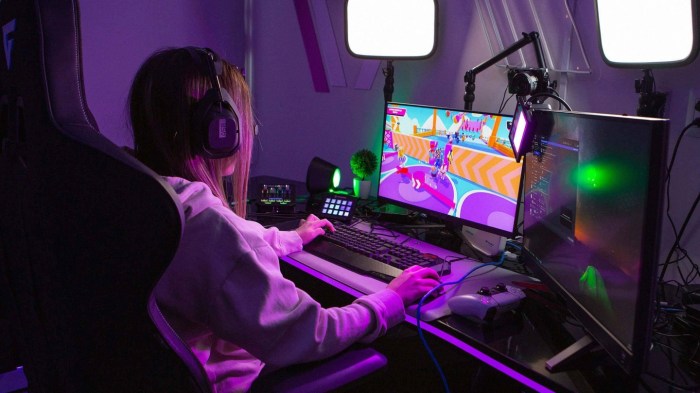
The online game streaming community is a vibrant and diverse ecosystem, encompassing millions of viewers and thousands of streamers, all interconnected through shared interests in video games and digital entertainment. This community isn’t just about watching; it’s a complex social network built on interaction, shared experiences, and the cultivation of parasocial relationships. Its structure and dynamics are constantly evolving, shaped by technological advancements and the changing preferences of its participants.The multifaceted nature of the online game streaming community is defined by the varied types of streamers and their respective audiences.
Different niches cater to diverse tastes and preferences, creating a rich tapestry of content.
Types of Online Game Streamers and Their Audiences
Streamers often specialize in specific game genres, platforms, or styles. For instance, some focus on competitive esports titles, attracting audiences interested in high-skill gameplay and strategic analysis. Others might specialize in casual games, appealing to a broader audience seeking relaxation and entertainment. A significant segment focuses on role-playing games (RPGs), fostering a sense of community and shared narrative experience among viewers.
Finally, “Just Chatting” streamers prioritize interaction with their audience, building communities based on personality and shared interests rather than specific game titles. The audience for each type of streamer is intrinsically linked to the content offered; a competitive
- Counter-Strike* streamer will attract a very different audience than a
- Stardew Valley* streamer.
Social Dynamics within the Online Game Streaming Community
The online game streaming community is characterized by a unique blend of competition and collaboration. Streamers compete for viewers and sponsorships, leading to a dynamic landscape where innovation and engagement are crucial for success. However, collaboration is also prevalent, with streamers often participating in joint streams, tournaments, and community events. This fosters a sense of camaraderie and shared purpose, strengthening the bonds within the community.
The social dynamics are further shaped by the prevalence of “emotes,” “bits,” and other interactive features that allow viewers to actively participate in the stream, creating a more immersive and engaging experience for both streamers and viewers. The strong sense of community often leads to the development of dedicated fan bases, providing streamers with loyal support and fostering a sense of belonging among viewers.
Roles and Responsibilities of Streamers, Moderators, and Viewers
The online game streaming experience relies on a clear division of roles and responsibilities. Streamers are responsible for creating and delivering engaging content, interacting with their audience, and managing their online presence. Moderators act as gatekeepers, ensuring a positive and respectful environment by managing chat, enforcing community guidelines, and addressing viewer concerns. Viewers, in turn, contribute to the community by actively participating in chat, donating, and subscribing to their favorite channels.
This interplay of roles is crucial for maintaining a healthy and thriving streaming community. A successful stream depends on the coordinated efforts of all three groups. For example, a streamer’s ability to build a loyal following is often dependent on the effectiveness of their moderators in creating a welcoming and engaging chat environment. Viewers, in turn, contribute to the overall success of the stream through their engagement and interaction.
Hypothetical Case Study: Community Interaction on a Popular Streaming Channel
Let’s imagine a popular streamer, “ProGamerAlex,” known for theirLeague of Legends* gameplay. During a particularly intense ranked match, Alex makes a crucial mistake, leading to a loss. Instead of getting frustrated, Alex openly acknowledges the error, laughing it off and engaging in self-deprecating humor. The moderators quickly address a few negative comments in the chat, ensuring a positive atmosphere.
Viewers respond with supportive messages, using emotes and donating bits to show their appreciation for Alex’s honesty and good sportsmanship. The stream concludes with Alex thanking their viewers for their support, highlighting several specific comments and interactions from the chat. This scenario illustrates the positive feedback loop between streamer, moderators, and viewers, showcasing the collaborative nature of the online game streaming community.
The streamer’s authenticity fosters a sense of connection, the moderators maintain a positive environment, and the viewers actively participate, creating a vibrant and engaging online experience for everyone involved.
Monetization Strategies for Online Game Streamers
The path to profitability in the competitive world of online game streaming isn’t paved with gold, but with a smart blend of strategies. Success hinges on understanding your audience, choosing the right monetization methods, and consistently delivering high-quality content. This section will explore various revenue streams available to streamers, comparing their effectiveness and outlining a potential business plan for a new streamer.
Methods of Generating Revenue for Online Game Streamers
Several avenues exist for streamers to earn income. The most successful streamers often employ a multi-pronged approach, diversifying their income streams to mitigate risk and maximize earnings. A balanced strategy is crucial for long-term sustainability.
- Subscriptions: Platforms like Twitch and YouTube offer subscription services where viewers pay a recurring fee for exclusive perks, such as subscriber-only emotes, badges, and access to special streams. This creates a loyal, dedicated fanbase contributing regularly.
- Donations: Viewers can directly donate money to streamers through platforms like Streamlabs or PayPal. This is often driven by appreciation for the streamer’s content and community engagement.
- Sponsorships: Brands pay streamers to promote their products or services during streams. This can range from subtle mentions to dedicated segments featuring the sponsor’s offerings. Successful sponsorships require a strong alignment between the streamer’s audience and the brand.
- Affiliate Marketing: Streamers earn a commission by promoting products or services through unique affiliate links. This can involve recommending gaming gear, software, or other relevant items to their viewers.
- Merchandise Sales: Streamers can sell branded merchandise, such as t-shirts, mugs, or other items, to their fans. This requires upfront investment in design and production but can generate substantial revenue if the merchandise is popular.
- Advertising Revenue: On platforms like YouTube, streamers can earn money through ads displayed during their streams. However, this model can be less lucrative and may impact viewer experience if not managed carefully.
Comparison of Monetization Model Effectiveness
The effectiveness of each monetization model varies significantly depending on factors like audience size, engagement, and the streamer’s brand. Subscriptions offer a reliable, recurring income stream, while donations are unpredictable but can generate significant bursts of revenue. Sponsorships can be highly lucrative but require careful negotiation and brand alignment. Affiliate marketing and merchandise sales require additional effort in marketing and promotion.
Advertising revenue is often less controllable and depends heavily on viewer demographics and ad rates.
| Monetization Model | Pros | Cons | Example of Successful Implementation |
|---|---|---|---|
| Subscriptions | Reliable income, loyal fanbase | Requires a dedicated audience | Ninja’s large subscriber base on Twitch |
| Donations | High potential for large sums | Unpredictable income | Dr Disrespect’s highly engaged community often leading to large donations |
| Sponsorships | High earning potential | Requires careful brand selection | Pokimane’s successful partnerships with various brands |
Hypothetical Business Plan for a New Online Game Streamer
Let’s consider a new streamer focusing on a niche game, “Cyberpunk: Edgerunners,” targeting a younger demographic. Target Audience: Fans of Cyberpunk: Edgerunners, aged 16-25, interested in RPGs and anime. Platform: Twitch Content Strategy: High-quality gameplay showcasing unique builds and strategies, engaging with viewers through interactive elements and regular streams. Monetization Strategy:
- Focus on building a strong community through regular interaction and high-quality content to attract subscribers.
- Utilize Twitch’s affiliate program to earn revenue from subscriptions and bits.
- Explore sponsorships with gaming peripheral companies or anime-related brands.
- Implement a donation system via Streamlabs.
Revenue Projections (Year 1):
- Subscriptions: $500/month (average 50 subscribers at $10/month)
- Donations: $200/month (average)
- Sponsorships: $1000 (one-time sponsorship deal)
- Affiliate Marketing: $100/month (estimated)
Total Estimated Revenue (Year 1): $2,800. This projection is conservative and assumes moderate growth. Successful streamers can significantly exceed these figures.
Examples of Successful and Unsuccessful Monetization Strategies
“Success in streaming isn’t just about playing games well, it’s about building a brand and a community.”
Many streamers have successfully leveraged a combination of strategies, while others have faltered by focusing on only one revenue stream or neglecting community engagement. For example, Ninja’s early success was built on a combination of high-skill gameplay and strong community engagement, attracting both sponsorships and subscriptions. Conversely, streamers who rely solely on ads or infrequent donations often struggle to achieve financial stability.
The key is a diversified approach tailored to the specific audience and niche.
The Impact of Online Game Streaming on the Gaming Industry
Online game streaming has fundamentally reshaped the gaming landscape, influencing everything from game development and marketing to player perception and community engagement. Its impact is multifaceted and continues to evolve as the industry adapts to this powerful new force. The rise of platforms like Twitch and YouTube Gaming has created a symbiotic relationship between streamers, developers, and players, impacting the entire gaming ecosystem in profound ways.Online game streaming significantly influences game development and marketing strategies.
Developers are now actively incorporating streaming-friendly features into their games.
Streaming’s Influence on Game Development and Marketing
The popularity of streaming has led to a shift in game design. Developers are increasingly incorporating features that are visually appealing to viewers, such as exciting gameplay moments, dynamic events, and engaging character interactions. Marketing campaigns now frequently utilize streamers as brand ambassadors, leveraging their influence to reach a broader audience. Games featuring high replayability, emergent gameplay, or strong community elements are often favored by streamers, further influencing development priorities.
For example, the success of games likeAmong Us* can be partly attributed to its inherent stream-ability, encouraging social interaction and suspenseful gameplay perfectly suited for a live audience. This in turn has led other developers to consider similar mechanics in their game designs. Furthermore, many games now include features designed to enhance the streaming experience, such as integrated overlays or special streamer-only content.
Streaming’s Effect on Game Popularity and Sales
Streaming directly impacts a game’s popularity and sales. Positive reviews and high viewership from prominent streamers can create significant hype and drive sales, particularly for indie titles that may not have the marketing budget of larger studios. Conversely, negative reviews or lack of streamer attention can hinder a game’s success. The “Let’s Play” phenomenon, where streamers showcase gameplay to a large audience, has become a major source of game discovery and marketing, effectively replacing traditional review sites for many gamers.
For example, the massive success of
Fortnite* was significantly boosted by its high visibility on Twitch and YouTube, attracting millions of new players through streamer-driven content.
Streamers’ Role in Shaping Player Perception and Community Engagement
Online game streamers play a crucial role in shaping player perception and fostering community engagement. Streamers act as influencers, guiding player expectations and influencing purchasing decisions. They build strong communities around their channels, creating spaces for players to interact and discuss games. This community aspect extends beyond the streamer’s immediate audience; viewers often engage with each other through chat and forums, fostering a broader sense of shared experience around the game being streamed.
This community engagement can lead to increased player retention and loyalty, ultimately benefiting the game developers. For instance, streamers often organize community events or tournaments, further enhancing player engagement and fostering a sense of belonging.
Streaming’s Impact Across Different Game Genres
The impact of streaming varies across different game genres. Games with high action, fast-paced gameplay, or competitive elements tend to perform particularly well on streaming platforms, attracting viewers who enjoy exciting moments and skilled play. However, genres like RPGs or narrative-driven games can also find success through streaming, often focusing on storytelling, character development, and community interaction. For example, while first-person shooters and battle royales thrive on Twitch for their fast-paced action, relaxing and creative games likeStardew Valley* have also found a dedicated and substantial following, showcasing a different aspect of streaming appeal.
The diversity of games successfully streamed highlights the versatility of the medium and its ability to cater to a wide range of player preferences.
Online Game Development
Creating engaging online games is a complex process requiring a blend of artistic vision, technical expertise, and meticulous planning. From initial concept to final release, numerous stages demand careful consideration and collaboration. This section delves into the multifaceted world of online game development, exploring its various stages, technical underpinnings, and development methodologies.
Stages of Online Game Development
The development of an online game is typically divided into several key stages, each with its own specific challenges and deliverables. These stages are often iterative, with feedback loops ensuring the final product meets the desired quality and player expectations. A common breakdown includes: Concept and Design, Pre-production, Production, Testing, and Release & Post-Release. Each stage builds upon the previous one, ensuring a smooth transition towards the final product.
Technical Aspects of Online Game Development
Building an online game demands proficiency in a variety of technical skills. Choosing the right programming languages, game engines, and networking technologies is crucial for success. Popular programming languages include C++, C#, and Java, each offering unique strengths and weaknesses depending on the game’s complexity and target platform. Game engines like Unity and Unreal Engine provide powerful tools and frameworks, significantly reducing development time and effort.
Efficient networking solutions, like those using UDP or TCP protocols, are essential for managing real-time interactions between players. Database systems are also vital for handling player data, game progress, and in-game economies.
Game Development Methodologies
Different methodologies are employed in online game development to manage the project lifecycle and ensure efficient resource allocation. Two prominent approaches are Agile and Waterfall. The Waterfall methodology follows a linear sequence of stages, with each stage completed before the next begins. This approach is suitable for projects with well-defined requirements and minimal anticipated changes. Agile, on the other hand, embraces iterative development, focusing on flexibility and adaptability.
Agile methodologies, like Scrum, involve short development cycles (sprints) with continuous feedback and adjustments. Choosing the appropriate methodology depends on the project’s size, complexity, and the team’s experience.
Hypothetical Project Plan: A Simple Online Multiplayer Card Game
Let’s imagine developing a simple online multiplayer card game. This project will utilize the Agile methodology, focusing on iterative development and frequent testing.
| Stage | Tasks | Timeline (Weeks) | Tools/Technologies |
|---|---|---|---|
| Concept & Design | Define core gameplay, art style, target audience. Create initial game design document. | 2 | Google Docs, Figma |
| Pre-production | Develop prototype, select game engine (Unity), establish basic network architecture. | 4 | Unity, TCP/IP networking |
| Production (Sprint 1) | Implement core game mechanics (card drawing, playing, scoring). Basic UI design. | 4 | C#, Unity |
| Production (Sprint 2) | Multiplayer functionality, basic matchmaking. Initial art assets. | 4 | C#, Unity, Photon (for networking) |
| Production (Sprint 3) | Improved UI/UX, sound effects, basic in-game store. | 4 | C#, Unity, Audacity |
| Testing | Alpha testing with internal team, beta testing with selected players. Bug fixing. | 2 | TestFlight, Google Play Console |
| Release & Post-Release | Official launch, monitor player feedback, implement updates and bug fixes. | Ongoing | Various analytics tools |
Successful online game development hinges on a well-defined plan, skilled team, and a robust iterative process. Continuous feedback and adaptation are key to creating a compelling and engaging experience for players.
Online Games for Girls
The gaming landscape, once perceived as a predominantly male domain, has undergone a significant transformation. A burgeoning market of online games specifically designed for girls showcases diverse themes, innovative gameplay, and sophisticated marketing strategies. Understanding these elements is crucial for developers and marketers seeking to tap into this lucrative and ever-evolving sector.
Common Themes and Genres in Online Games for Girls
Games targeted towards girls frequently incorporate themes of creativity, social interaction, and self-expression. Popular genres include life simulation games, where players manage virtual lives, relationships, and careers; dress-up and fashion games, emphasizing style and customization; and story-based adventure games, often featuring strong female protagonists and narratives focused on friendship, romance, and personal growth. These games often emphasize collaboration and community building, reflecting the social nature of many girls’ play patterns.
Examples include games featuring virtual pets, allowing nurturing and caregiving, or those focused on crafting and building, fostering creativity and problem-solving skills.
Challenges and Opportunities in Developing Online Games for Female Audiences
Developing games for girls presents unique challenges. One significant hurdle is overcoming pre-conceived notions about what constitutes “girl-friendly” content. Many developers fall into the trap of relying on overly simplistic gameplay or stereotypical themes, leading to games that lack depth and fail to resonate with their target audience. However, this also presents significant opportunities. By creating games that offer rich narratives, engaging characters, and meaningful choices, developers can attract a loyal and dedicated female player base.
Furthermore, incorporating elements of customization and social interaction can enhance the overall gaming experience and encourage player retention. The success of games like “Animal Crossing” and “Stardew Valley,” which appeal to a broad audience including a large female demographic, demonstrate the potential for games that transcend traditional gendered stereotypes.
Marketing Strategies for Online Games Aimed at Girls Versus Boys
Marketing strategies for online games targeted at girls differ significantly from those aimed at boys. While games for boys often emphasize competition and action, marketing for girls’ games frequently highlights social interaction, creativity, and self-expression. Advertising campaigns often feature bright colors, positive imagery, and messaging that focuses on friendship, empowerment, and personal growth. Social media platforms, particularly those with strong female user bases like Instagram and TikTok, are frequently utilized for targeted advertising and community engagement.
In contrast, marketing for boys’ games often leverages action-packed trailers, competitive esports, and influencer marketing focused on gaming personalities popular within the male gaming community. This targeted approach reflects the differing preferences and consumption patterns of each demographic.
Examples of Successful Online Games Specifically Designed for Girls
Several online games have achieved remarkable success by catering specifically to female audiences. “Barbie Fashion Designer,” for example, allowed players to create and style virtual outfits, fostering creativity and self-expression. Games like “My Horse and Me” successfully combined animal care with role-playing elements, appealing to a wide range of interests. More recent titles, such as “Animal Crossing: New Horizons,” have transcended traditional gendered marketing, achieving widespread popularity among both male and female players by emphasizing community building, customization, and relaxation.
The success of these games highlights the importance of understanding and catering to the diverse interests and preferences within the female gaming community.
Online Casino Industry (Related but Separate Section)
The online casino industry is a rapidly growing sector of the global gambling market, characterized by its accessibility, variety of games, and significant financial implications. Understanding its regulatory landscape, game mechanics, marketing strategies, and inherent risks is crucial for both players and industry stakeholders.
The Regulatory Landscape of Online Casinos
The regulatory environment surrounding online casinos varies drastically across jurisdictions. Some countries have fully legalized and regulated online gambling, establishing licensing authorities, and implementing strict rules regarding responsible gaming, player protection, and taxation. Others maintain a complete ban on online casinos, while many fall somewhere in between, with varying levels of tolerance and specific regulations for different types of games or operators.
These differences often lead to legal complexities and challenges for both operators and players. For example, the UK Gambling Commission sets stringent rules for licensed operators, while many US states have individually legalized online gambling with varying degrees of oversight. The EU also has a patchwork of regulations, with some member states having more permissive environments than others.
This lack of global harmonization presents ongoing challenges for the industry.
Types of Online Casino Games and Their Mechanics
Online casinos offer a diverse range of games, each with its own unique mechanics and associated probabilities. Slot machines, a staple of online casinos, utilize Random Number Generators (RNGs) to determine outcomes, ensuring fairness (in theory) and unpredictable results. Table games like blackjack, roulette, and baccarat involve strategic decision-making by players interacting with a virtual dealer or against the house.
Poker, both in its various forms (Texas Hold’em, Omaha, etc.), relies on a combination of skill and chance, with players competing against each other for a pot of money. Live dealer games combine the virtual environment with a real-life dealer streamed via video, providing a more immersive experience for players. Each game has different house edges, representing the theoretical advantage the casino has over the player in the long run.
The Role of Online Casino Affiliates
Online casino affiliates play a critical role in marketing and player acquisition for online casinos. These affiliates, often websites or influencers, promote casinos and their games in exchange for a commission on the revenue generated from players they refer. They employ various marketing techniques, including search engine optimization (), social media marketing, and content marketing, to attract potential players.
Affiliate marketing is a significant channel for online casinos to reach new audiences and expand their player base. The effectiveness of an affiliate program is measured by various key performance indicators (KPIs), including the number of new players acquired, the amount of revenue generated, and the lifetime value of the referred players. Successful affiliates possess a deep understanding of their target audience and utilize sophisticated marketing strategies to maximize their returns.
Comparison of Online Casino Games
| Game Type | House Edge (Approximate) | Skill Level Required | Risk Level |
|---|---|---|---|
| Slot Machines | 5-15% (varies greatly) | Low | High (due to variance) |
| Blackjack | 0.5-1% (with optimal strategy) | Medium-High | Medium |
| Roulette | 2.7% (European Roulette), 5.26% (American Roulette) | Low | Medium-High |
| Poker | Varies greatly depending on game and skill | High | Variable, depends on skill and opponents |
Responsible Gambling and Online Casino Advice
Online casinos offer thrilling entertainment, but it’s crucial to approach them responsibly. Understanding the risks and employing strategies for safe play is essential to ensure that gambling remains a fun pastime and not a source of harm. This section provides guidance on responsible gambling practices, potential dangers, and resources available for support.
Guidelines for Responsible Gambling
Responsible gambling involves setting limits and adhering to them. This includes establishing a budget beforehand and sticking to it, regardless of wins or losses. It also means limiting playtime to prevent excessive engagement and ensuring gambling doesn’t interfere with other important aspects of life, such as work, relationships, or health. Regular self-assessments are crucial to monitor gambling habits and identify any potential problems early on.
Taking breaks and utilizing self-exclusion options provided by online casinos are also important aspects of responsible gaming.
Potential Risks and Harms of Online Gambling
Online gambling, while entertaining, carries several potential risks. Financial problems are a major concern, as losses can quickly accumulate, leading to debt and financial instability. Addiction is another serious risk; the ease of access and anonymity of online casinos can contribute to compulsive gambling behavior, negatively impacting mental and physical health. Isolation and strained relationships are also common consequences, as individuals may prioritize gambling over other commitments.
Furthermore, the deceptive marketing tactics employed by some online casinos can further exacerbate these risks, making it crucial for individuals to be aware and approach online gambling with caution.
Resources and Support for Gambling Addiction
Several resources are available for individuals struggling with gambling addiction. GamCare, for instance, offers confidential support, advice, and resources for problem gamblers and their families. They provide helplines, online support groups, and educational materials to help individuals understand and overcome gambling addiction. Similarly, organizations like the National Council on Problem Gambling (NCPG) offer a wide range of services, including referrals to treatment centers and educational programs.
These organizations often utilize evidence-based treatments such as cognitive-behavioral therapy (CBT) to help individuals manage their gambling behavior. It’s crucial to remember that seeking help is a sign of strength, and these resources provide a pathway to recovery.
A Brochure Promoting Responsible Online Gambling Behavior
Imagine a tri-fold brochure. The front panel features a calming image, perhaps a stylized image of a person enjoying a game responsibly, with the headline “Play Smart, Play Safe: Responsible Online Gambling.” The inside left panel details the importance of setting limits (budget, time, session frequency), while the right panel lists resources and helplines, including website addresses and phone numbers for GamCare and the NCPG.
The back panel summarizes key points about responsible gambling and features a strong call to action: “If you or someone you know needs help, please reach out.” The brochure uses clear, concise language, avoiding jargon and emphasizing the positive aspects of responsible gambling while highlighting the dangers of uncontrolled play. The overall tone is supportive and encouraging, promoting a sense of hope and recovery.
Legality of Online Gambling
The legality of online gambling is a complex and multifaceted issue, varying significantly across jurisdictions worldwide. Understanding these legal frameworks is crucial for both operators and players, as the consequences of non-compliance can range from hefty fines to criminal prosecution. This section explores the diverse approaches taken by different countries and regions in regulating online gambling, highlighting the challenges involved in enforcement and providing a simplified overview of the global legal landscape.
Legal Frameworks Governing Online Gambling
Different countries adopt vastly different approaches to online gambling regulation. Some jurisdictions have completely prohibited online gambling, while others have established comprehensive regulatory frameworks licensing and overseeing operators. Many countries fall somewhere in between, with varying levels of tolerance or outright bans depending on the specific type of online gambling activity (e.g., sports betting may be legal while online casinos are not).
These differences often stem from cultural norms, religious beliefs, and varying levels of government control over the economy. For example, some countries view gambling as a potential source of revenue and tax income, leading to a more permissive regulatory environment. Others prioritize social responsibility and public health concerns, leading to stricter controls or outright bans.
Comparison of Jurisdictional Approaches
The United Kingdom, for instance, has a robust regulatory system for online gambling, with the UK Gambling Commission licensing and overseeing operators. This approach aims to balance the economic benefits of the industry with the need to protect consumers from harm. In contrast, the United States has a more fragmented regulatory landscape, with federal laws prohibiting certain forms of online gambling while individual states have varying degrees of autonomy in regulating or prohibiting online gambling within their borders.
Some states have legalized and regulated online gambling, while others maintain strict prohibitions. This patchwork approach creates complexities for both operators and players. Countries like Germany have recently undergone significant changes in their online gambling regulations, moving from a relatively lax environment to a more tightly controlled system.
Challenges in Enforcing Online Gambling Regulations
Enforcing online gambling regulations presents several significant challenges. The borderless nature of the internet makes it difficult for authorities to track and regulate online gambling operators based outside their jurisdiction. The use of offshore servers and sophisticated payment processing methods further complicates enforcement efforts. Moreover, the rapid evolution of technology and the emergence of new forms of online gambling constantly present new challenges for regulators, requiring continuous adaptation and innovation in enforcement strategies.
Furthermore, the detection and prevention of underage gambling and problem gambling remain persistent concerns requiring significant resources and collaborative efforts between governments and industry stakeholders.
Simplified Map of Online Gambling Legality
The following text provides a simplified representation of the legal status of online gambling across different regions. This is a highly generalized overview and specific laws within each region can vary greatly.
North America: Highly variable. Some states/provinces have legalized online gambling, others have not. Generally, stricter regulations than in Europe.
Europe: Varies significantly by country. Some have established licensing and regulatory frameworks, others have more permissive or restrictive approaches. Generally, more lenient than North America but with increasing regulation.
Asia: Mostly illegal or heavily restricted. Exceptions exist but are often limited and subject to strict controls.
Africa: Largely unregulated or illegal. Exceptions exist, often with limited scope.
Oceania: Mixed, with some countries having legalized online gambling and others maintaining strict prohibitions.
Final Review
From the early days of broadcasting to massive global audiences, online game streaming has undeniably revolutionized the gaming industry and beyond. We’ve explored its evolution, the vibrant communities it fosters, the diverse monetization strategies, and its significant impact on game development and marketing. While the landscape continues to evolve, one thing remains clear: the power of connection, entertainment, and community that online game streaming provides is here to stay, offering exciting opportunities for players and creators alike.
So, grab your controller, tune in, and get ready for the next level of entertainment!
Helpful Answers
What are the best games to stream for beginners?
Popular, easy-to-understand games with engaging gameplay are ideal. Think Among Us, Fall Guys, or even some classic single-player titles that are visually appealing and easy to commentate on.
How much money can a streamer realistically make?
Earnings vary wildly. Small streamers might earn little to nothing, while top streamers can earn six figures or more annually through subscriptions, donations, sponsorships, and advertisements. Success depends heavily on audience engagement and consistency.
What equipment do I need to start streaming?
You’ll need a computer, a good microphone, a webcam (optional but recommended), and streaming software (like OBS or Streamlabs). The quality of your equipment will influence your viewers’ experience.
How do I build a community around my stream?
Engage with your viewers! Respond to comments, ask questions, run polls, and create a welcoming environment. Consistency is key – stream regularly and promote your channel across social media.