Ever dreamt of building your own fortress, crafting epic weapons, and battling hordes of the undead – all without spending a dime? The world of free online survival games offers just that! From sprawling post-apocalyptic wastelands to lush fantasy forests, these games provide endless hours of adventure and challenge. We’ll explore the booming popularity of these titles, examining their diverse gameplay mechanics, monetization strategies, and thriving communities.
Get ready to dive into a world of crafting, combat, and survival!
This exploration will cover everything from the top contenders in the genre to the innovative mechanics that keep players hooked. We’ll also delve into the business side, discussing how these free-to-play games manage to stay afloat and the ethical considerations involved. Finally, we’ll examine the vibrant communities that form around these games, showcasing the social aspects that make them so compelling.
Popularity and Trends of Free Online Survival Games
The free-to-play online survival game market has exploded in recent years, captivating millions with its blend of challenge, creativity, and social interaction. These games offer a compelling escape, allowing players to build, craft, and battle their way to survival in diverse and often unforgiving virtual worlds. Their accessibility, driven by the free-to-play model, has significantly contributed to their widespread popularity across various gaming platforms.
Current Popularity Across Platforms
Free online survival games enjoy significant popularity across PC, mobile, and console platforms. PC remains a dominant platform, offering higher fidelity graphics and more complex gameplay mechanics. Mobile platforms, however, boast immense accessibility, allowing players to engage in shorter bursts of gameplay on the go. Consoles, with their controller-based gameplay, offer a more relaxed and often more social experience, particularly when played with friends.
The success of these games hinges on their ability to adapt to the strengths and limitations of each platform, offering tailored experiences that cater to the preferences of their diverse player bases. For example, mobile games often prioritize streamlined controls and shorter session lengths, while PC games can delve into greater depth and complexity.
Top 5 Most Popular Free Online Survival Games and Their Success Factors
Identifying the absolute “top 5” is difficult due to fluctuating player counts and subjective opinions. However, games consistently ranking highly and demonstrating enduring popularity include:
- Fortnite*,
- PUBG Mobile*,
- Roblox*,
- Free Fire*, and
- Fortnite*’s success, for instance, is largely due to its dynamic gameplay, frequent updates introducing new items and maps, and its integration with popular culture.
- PUBG Mobile*’s widespread appeal stems from its accessibility on mobile devices and its competitive battle royale format.
Minecraft* (its free version on certain platforms). Their success can be attributed to several factors
engaging gameplay loops that reward persistence, strong community building through social features, regular content updates to maintain player interest, and effective monetization strategies that avoid being overly intrusive.
Gameplay Mechanics Comparison of Prominent Free Online Survival Games
Several popular free online survival games offer distinct gameplay mechanics, creating diverse experiences for players.
- Fortnite* focuses heavily on building structures for both offense and defense within its battle royale format.
- Minecraft*, on the other hand, emphasizes creative building and exploration in a sandbox environment, with combat playing a secondary role for many players.
- PUBG Mobile* prioritizes realistic combat and strategic positioning in its battle royale setting, with less emphasis on crafting and building. These differences cater to various player preferences, attracting a broad audience.
Comparison of Game Features
| Game | Crafting | Building | Combat |
|---|---|---|---|
| Fortnite | Moderate (weapons, items) | Extensive (structures, fortifications) | High emphasis (shooting, building battles) |
| PUBG Mobile | Minimal (limited looting) | None | High emphasis (realistic shooting, strategy) |
| Minecraft | Extensive (tools, weapons, structures) | Extensive (unlimited building possibilities) | Moderate (basic combat, various weapons) |
| Roblox (example game within the platform) | Variable (depends on the game) | Variable (depends on the game) | Variable (depends on the game) |
Game Mechanics and Features in Free Online Survival Games
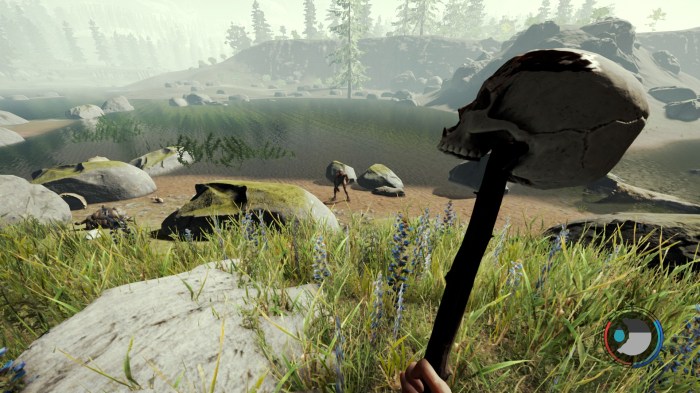
Free online survival games offer a diverse and engaging experience, built upon a foundation of core mechanics and enhanced by a variety of features that differentiate them from one another. Understanding these elements is key to appreciating the depth and breadth of this popular genre.
The core gameplay loop typically revolves around the constant struggle for survival. Players must master several key mechanics to thrive in these virtual worlds.
Core Survival Mechanics
Resource gathering, crafting, building, and combat form the backbone of most survival games. Resource gathering involves collecting materials from the environment – wood, stone, ore, food, and water – which are then used in crafting. Crafting allows players to create tools, weapons, armor, and building materials, improving their chances of survival. Building provides shelter, storage, and defense against both the environment and other players.
Finally, combat, whether against wildlife or other players, is often a necessary aspect of survival. The balance and interplay between these mechanics define the unique gameplay experience of each title. For example, a game focused on stealth might de-emphasize direct combat, while a PvP-focused game might prioritize weapon crafting and strategic base building.
Environmental Variety in Survival Games
The setting of a survival game significantly impacts gameplay. A wilderness setting, like that found in many games inspired by real-world locations, emphasizes resource scarcity and the dangers of the natural world – harsh weather, predators, and disease. Post-apocalyptic settings, on the other hand, often incorporate elements of scavenging, societal collapse, and conflict with other survivors. Fantasy survival games might blend elements of magic, mythical creatures, and unique resources, leading to different crafting and combat possibilities.
The environment directly dictates the challenges players face and the strategies they must employ to survive.
Innovative Game Mechanics in Free Online Survival Games
Many free online survival games have introduced innovative mechanics to enhance gameplay. For example, some games incorporate dynamic weather systems that significantly impact resource availability and player movement. Others introduce intricate social systems, allowing for complex alliances, betrayals, and trade amongst players. Some games have even implemented unique crafting systems, where players can experiment with different combinations of materials to create unexpected and powerful items.
The integration of these innovative mechanics significantly increases the replayability and overall appeal of the games.
Hypothetical Free Online Survival Game: “Project Chimera”
Project Chimera is a free online survival game set in a vibrant, bioluminescent fantasy forest. Its unique feature is a dynamic ecosystem where players’ actions directly influence the environment. Over-harvesting resources, for instance, could lead to the extinction of certain plant or animal species, impacting crafting and food availability. The game also incorporates a novel crafting system based on genetic manipulation.
Players can collect DNA samples from creatures and plants to create hybrid items with unique properties. Combat involves both traditional weapons and genetically engineered creatures that players can summon to fight for them. Furthermore, the game features a deep social system with a sophisticated reputation system impacting player interactions and trade opportunities. This blend of environmental impact, unique crafting, and strategic combat creates a rich and engaging survival experience.
Monetization Strategies in Free Online Survival Games
The success of a free-to-play online survival game hinges not only on engaging gameplay but also on a sustainable and ethical monetization strategy. These games often attract a large player base, providing ample opportunity for revenue generation, but finding the right balance between player satisfaction and profit is crucial. A poorly implemented monetization system can quickly drive players away, while a well-designed system can foster a thriving and supportive community.The most common monetization strategies in free-to-play survival games revolve around providing optional purchases that enhance the player experience without impacting core gameplay.
This contrasts sharply with “pay-to-win” models, which directly grant competitive advantages to paying players, often leading to negative player perception and community fracturing.
Cosmetic Item Sales
Cosmetic items, such as unique skins for characters, weapons, or buildings, are a cornerstone of many free-to-play survival games’ monetization. These items offer players a way to personalize their in-game experience without affecting the balance of the game. Examples include skins for weapons in games likeRust* or character outfits in
-
ARK
Survival Evolved*. The effectiveness of this model depends heavily on the quality and appeal of the cosmetics offered. Regular updates with fresh and exciting cosmetic items are essential to maintain player interest and drive sales. Games like
- Fortnite* have demonstrated the immense potential of this model, generating billions of dollars through the sale of virtual cosmetics.
Battle Pass Systems
Battle passes offer players a tiered reward system, usually accessible through a paid purchase. These passes provide access to exclusive cosmetic items, in-game currency, or other bonuses as players progress through a series of challenges or levels. The battle pass system found in games likePUBG Mobile* and
Call of Duty
Mobile* provides a consistent revenue stream and encourages continued engagement. The appeal lies in the sense of progression and the opportunity to earn valuable rewards, providing an incentive to invest even if only some rewards are desired. Free tiers often offer a small selection of rewards, enticing players to upgrade for the full experience.
In-App Purchases (IAPs)
In-app purchases encompass a broader range of options beyond cosmetics and battle passes. This can include purchasing in-game currency, premium resources (like crafting materials or building components), or time-saving boosts. The ethical considerations surrounding IAPs are particularly complex. While many games offer these as purely optional conveniences, some games employ aggressive tactics that push players toward spending money, potentially leading to frustration and dissatisfaction.
The effectiveness of IAPs varies greatly depending on game design and player perception. Games that offer a fair and balanced experience, where purchases enhance rather than dominate gameplay, tend to be more successful in generating revenue through IAPs.
Comparison of Monetization Models
The relative effectiveness of these models depends significantly on the specific game and its target audience. A game with a strong emphasis on player customization might find cosmetic sales highly successful, while a game focused on rapid progression might benefit more from IAPs offering resource boosts. A balanced approach, incorporating elements of all three models, is often the most effective strategy, providing options for players with varying preferences and spending habits.
Ethical Considerations of Monetization in Free-to-Play Games
The ethical considerations of monetization in free-to-play games center on transparency and fairness. Players should be clearly informed about the nature and extent of in-game purchases, and these purchases should never give one player a significant competitive advantage over another. The use of manipulative tactics or deceptive practices to encourage spending is unethical and can damage a game’s reputation.
Maintaining a balance between generating revenue and providing a fair and enjoyable experience for all players is paramount.
Pros and Cons of Three Monetization Strategies
Before outlining the pros and cons, it’s important to note that the success of any monetization strategy is highly dependent on the specific game and its community. What works well for one game might fail miserably for another.
- Cosmetic Item Sales:
- Pros: Non-intrusive, enhances personalization, high potential revenue, minimal impact on gameplay balance.
- Cons: Requires constant updates with new items, may not appeal to all players, potential for perceived “pay-to-look-better” issues.
- Battle Pass Systems:
- Pros: Encourages consistent engagement, provides a sense of progression, predictable revenue stream, offers both free and paid options.
- Cons: Can feel grindy, requires regular updates, may not appeal to casual players, potential for feeling pressured to purchase.
- In-App Purchases (IAPs):
- Pros: High potential revenue, allows for various purchase options, can accelerate progression (with ethical considerations).
- Cons: High potential for “pay-to-win” mechanics if not carefully implemented, risk of alienating free-to-play players, requires careful balancing to avoid frustration.
Community and Social Aspects of Free Online Survival Games
The success of any free-to-play online survival game hinges not just on its mechanics and features, but crucially on the strength and vibrancy of its community. A thriving player base fosters engagement, longevity, and ultimately, profitability. The social aspects, therefore, are integral to the overall game experience and its long-term viability.Successful community engagement relies on fostering a sense of belonging and shared purpose.
Players need to feel valued and connected to both the game and each other.
Successful Community Engagement Strategies
Developers employ various strategies to cultivate a positive and active community. These strategies often involve direct communication, collaborative content creation, and rewarding player participation. Examples include regular developer streams, in-game events designed to encourage teamwork, and active moderation of community forums and social media channels. Games like
- Rust*, for instance, leverage a dedicated forum for players to report bugs, share strategies, and engage in discussions with developers, fostering a sense of direct involvement.
- Valheim*, on the other hand, utilized early access to great effect, incorporating player feedback directly into the development process, building a strong community bond through collaborative game design.
The Role of Guilds, Clans, or Alliances
Guilds, clans, or alliances are fundamental social structures within many free online survival games. They provide players with a sense of belonging, shared goals, and mutual support. These groups often collaborate on large-scale projects, such as building massive bases or conquering challenging in-game territories. The organizational structure of these groups varies widely; some are highly structured with ranks and responsibilities, while others are more loosely organized, emphasizing player autonomy.
The presence of such groups significantly enhances the social interaction and cooperative gameplay elements. For example, in games like
ARK
Survival Evolved*, large, well-organized tribes dominate the gameplay landscape, creating compelling narratives and dynamic power struggles.
Social Interaction Mechanics in Different Free Online Survival Games
The mechanics facilitating social interaction differ across various free online survival games. Some games, like
- Minecraft*, emphasize player cooperation and creativity, while others, such as
- DayZ*, focus on player-versus-player (PvP) conflict and survival.
- Fortnite*, despite its battle royale format, includes social aspects through team play and building structures collaboratively. These differences shape the overall community dynamic, influencing the type of social interactions that flourish within the game. The emphasis on cooperative versus competitive gameplay dramatically affects the community’s structure and the kinds of relationships that develop among players.
Hypothetical Community Event: “The Great Scavenger Hunt”
To further illustrate effective community engagement, let’s consider a hypothetical community event for a free online survival game. “The Great Scavenger Hunt” would involve hidden clues scattered across the game map, leading to a final, valuable reward. The clues could be cryptic riddles, environmental puzzles, or even mini-games. Teams of players would collaborate to solve the clues, promoting teamwork and communication.
The event would run for a week, culminating in a final showdown where the first team to locate the treasure receives exclusive in-game items, such as unique skins or powerful weapons. Smaller rewards could be given out along the way to encourage participation and maintain engagement throughout the event. This event fosters both cooperation and competition, stimulating social interaction within the game’s community.
Online Game Development Aspects (Broader Context)
Creating a successful free-to-play online survival game is a complex undertaking, demanding a multi-faceted approach encompassing design, development, testing, and ongoing maintenance. The journey from initial concept to a thriving online community requires careful planning, skilled execution, and a deep understanding of the free-to-play market.
Stages of Free-to-Play Online Game Development
Developing a free-to-play online game is a multi-stage process. It begins with conceptualization and design, including defining the core gameplay loop, target audience, and monetization strategy. This is followed by pre-production, where the game’s architecture and technical specifications are laid out. The production phase involves the actual development of the game, encompassing programming, art creation, sound design, and level design.
Rigorous testing, including alpha and beta phases, ensures quality and identifies bugs before release. Finally, post-launch support involves ongoing updates, bug fixes, content additions, and community management. Each stage requires careful planning and execution, with constant iteration and refinement based on feedback and data analysis.
Game Balancing and Player Retention
Game balancing is crucial for long-term player retention in free-to-play games. An unbalanced game, where one strategy or character is overwhelmingly superior, leads to frustration and player churn. A well-balanced game offers a fair and engaging experience, encouraging players to continue playing and investing time. For example, in a survival game, if one weapon is significantly more powerful than others, players will only use that weapon, diminishing the strategic depth and replayability.
Careful consideration of resource scarcity, enemy difficulty, and player progression is essential to create a satisfying and competitive experience that keeps players engaged. Regular updates and adjustments based on player feedback are vital to maintain balance over time.
Comparison of Game Engines for Online Game Development
Several game engines are suitable for developing online games, each with its strengths and weaknesses. Unity is a popular choice due to its cross-platform compatibility, extensive community support, and user-friendly interface. Unreal Engine, known for its high-fidelity graphics, is preferred for visually stunning games, but it has a steeper learning curve. Other options include Godot Engine (open-source and lightweight), and Amazon Lumberyard (cloud-focused).
The choice of engine often depends on factors such as budget, team expertise, target platform, and desired visual fidelity. For example, a smaller team with limited resources might opt for Unity’s accessibility, while a larger team aiming for AAA graphics might choose Unreal Engine.
Flowchart: Developing a Multiplayer Online Game Feature
The development of a multiplayer online game feature, such as a new weapon or game mode, can be visualized using a flowchart. The process typically starts with defining the feature’s requirements and design. This is followed by implementation, where programmers write the code and artists create assets. Thorough testing is essential to identify and fix bugs. Once testing is complete, the feature is integrated into the main game and undergoes further testing before being deployed to the live servers.
Finally, monitoring player feedback and making adjustments are crucial for maintaining quality and balancing the game.[Illustrative Flowchart Description: The flowchart would begin with a rectangle labeled “Define Feature Requirements,” followed by a diamond labeled “Design Complete?”. A ‘Yes’ path leads to a rectangle “Implement Feature,” while a ‘No’ path loops back to the design rectangle. From “Implement Feature,” a path leads to a rectangle “Test Feature,” followed by a diamond “Bugs Found?”.
A ‘Yes’ path loops back to “Implement Feature,” while a ‘No’ path leads to a rectangle “Integrate into Game.” This is followed by another rectangle “Deploy to Servers” and finally a rectangle “Monitor and Adjust.” ]
Free Online Games for Different Audiences
The world of free online survival games isn’t a monolithic entity. Different games cater to vastly different audiences, employing unique design choices, marketing strategies, and gameplay mechanics to attract and retain specific player demographics. Understanding these differences is crucial for both game developers and players seeking a title that truly resonates with their preferences. This section explores how free online survival games are tailored to specific audiences, focusing on gender, age, and interests.
Games Designed for Girls
While the survival game genre is often associated with a predominantly male audience, several free online games actively court female players. These games often deviate from the typical “grim and gritty” aesthetic, opting for brighter visuals, more collaborative gameplay, and narratives that emphasize social interaction and character customization. For example, games might focus on building communities, crafting aesthetically pleasing items, and engaging in cooperative tasks rather than solely emphasizing combat or resource gathering.
The emphasis shifts from brutal competition to social interaction and creative expression. Marketing for these games often utilizes imagery and language that appeals to a female audience, highlighting the social and creative aspects of the game. This approach acknowledges that female gamers, like their male counterparts, enjoy a variety of gaming experiences and are not a homogenous group with uniform preferences.
Design Choices and Marketing Strategies Across Demographics
The design choices and marketing strategies employed in free online survival games vary significantly depending on the target audience. Games aimed at younger players, for instance, might feature simpler mechanics, cartoonish graphics, and less violent content. Marketing materials would likely focus on the fun and educational aspects of the game, emphasizing its safety and suitability for children. In contrast, games targeting older, more experienced players might incorporate complex mechanics, realistic graphics, and more challenging gameplay.
Marketing might highlight the game’s depth, strategic complexity, and competitive elements. Similarly, games targeting specific interest groups, such as fans of fantasy or science fiction, will tailor their aesthetics, narratives, and gameplay to resonate with those specific interests. Consider the difference between a game featuring medieval fantasy settings versus one set in a futuristic dystopia; each will attract a different player base through its specific themes and world-building.
Gameplay Mechanics and Themes Attracting Diverse Player Bases
Gameplay mechanics and themes are instrumental in attracting diverse player bases. Games with a strong emphasis on crafting and building appeal to players who enjoy creative expression and problem-solving. Those focusing on exploration and discovery attract players who value exploration and discovery. Games with a heavy emphasis on social interaction and cooperation attract players who enjoy teamwork and community building.
Conversely, games emphasizing competitive PvP (player versus player) combat appeal to players who enjoy challenge and competition. The theme of the game is equally important; a cute, animal-themed survival game will attract a different audience than a post-apocalyptic zombie survival game. The combination of mechanics and themes ultimately dictates the type of player a game will attract.
Categorization of Free Online Survival Games by Target Audience
| Target Audience | Age Range | Gender | Game Examples (Illustrative) |
|---|---|---|---|
| Young Children (Family Friendly) | 6-12 | Mixed | Games with simplified mechanics, bright visuals, and cooperative gameplay. |
| Teenagers (Social Focus) | 13-19 | Mixed | Games emphasizing social interaction, character customization, and collaborative building. |
| Young Adults (Competitive) | 18-25 | Mixed | Games with challenging mechanics, competitive PvP elements, and a focus on skill mastery. |
| Adults (Strategic/Simulative) | 25+ | Mixed | Games emphasizing complex mechanics, strategic depth, and base-building simulations. |
The Online Gambling Industry (Related but Separate Discussion)
The online gambling industry is a multi-billion dollar global market, encompassing a vast array of games and betting options. While distinct from free online survival games, understanding its mechanics and ethical considerations provides a broader perspective on the digital entertainment landscape and the potential pitfalls of online engagement. This section will explore the mechanics of online casino games, the roles of affiliates, and responsible gambling practices.
Online Casino Free Spins Mechanics
Free spins are a common promotional tool used by online casinos to attract and retain players. They typically involve a set number of spins on a designated slot machine, with any winnings generated during these spins being credited to the player’s account, often subject to wagering requirements. These requirements dictate how many times the winnings must be wagered before they can be withdrawn as cash.
For example, a 20x wagering requirement on a £100 win means the player needs to wager £2000 before they can withdraw the winnings. The specific terms and conditions, including the eligible games and wagering requirements, vary significantly between casinos and promotions.
The Role and Responsibilities of Online Casino Affiliates
Online casino affiliates act as marketers, driving traffic to online casinos in exchange for a commission on the revenue generated by the players they refer. Their responsibilities include creating engaging marketing materials, managing their online presence (often through websites or social media), and adhering to strict regulations regarding advertising and responsible gambling. They play a crucial role in the growth and visibility of online casinos, but also bear the responsibility of promoting ethical and safe gambling practices.
Affiliates often face penalties for promoting unlicensed casinos or for engaging in misleading advertising practices.
Core Mechanics of a Typical Gambling Game
Let’s consider two examples: slot machines and blackjack. Slot machines rely on a random number generator (RNG) to determine the outcome of each spin. The RNG produces a sequence of random numbers that correspond to symbols on the reels. Winning combinations are pre-programmed, and the payout is determined by the specific combination and the bet amount. Blackjack, on the other hand, is a game of skill and chance.
Players aim to achieve a hand value closer to 21 than the dealer without exceeding it. The game’s mechanics involve card values, strategic decisions (hit, stand, double down, split), and the dealer’s actions, all contributing to the final outcome.
Responsible Online Gambling Advice
Before engaging in online gambling, it’s crucial to prioritize responsible gaming practices. Here’s some advice:
- Set a budget: Determine how much money you can afford to lose before you start playing and stick to it.
- Set time limits: Decide how long you will play for and stop when your time is up, regardless of wins or losses.
- Avoid chasing losses: Never try to recoup losses by gambling more. This can lead to significant financial problems.
- Take breaks: Regular breaks are essential to maintain perspective and avoid impulsive decisions.
- Seek help if needed: If you’re struggling with gambling addiction, reach out to support organizations or seek professional help. Many resources are available to assist those affected.
Legal Aspects of Online Gambling
The legal landscape surrounding online gambling is complex and varies significantly across jurisdictions. Understanding these differences is crucial for both operators and players to avoid legal repercussions. This section will explore the key legal frameworks, regulatory bodies, and potential consequences associated with online gambling activities.
International Legal Frameworks and Regulatory Bodies
The regulation of online gambling is largely decentralized, with individual countries or regions establishing their own laws and regulatory bodies. Some countries have embraced online gambling, licensing and regulating operators to ensure fair play and consumer protection. Others maintain a complete ban on all forms of online gambling, while some have a more nuanced approach, permitting certain forms of online gambling while prohibiting others.
Key regulatory bodies include the UK Gambling Commission (UKGC), the Nevada Gaming Control Board (NGCB) in the US, and the Malta Gaming Authority (MGA) in Europe. These bodies establish licensing requirements, conduct audits, and enforce regulations to maintain the integrity of the online gambling market. The absence of a unified global regulatory framework leads to inconsistencies and challenges in enforcing cross-border regulations.
Distinctions Between Legal and Illegal Online Gambling Operations
Legal online gambling operations are typically licensed and regulated by the relevant authorities in their jurisdiction. These operators adhere to strict rules regarding responsible gambling, data protection, and financial transactions. They are subject to regular audits and inspections to ensure compliance. In contrast, illegal online gambling operations operate outside the legal framework, often lacking proper licensing and oversight.
These operations may engage in fraudulent activities, offer unfair games, or fail to protect player data. The lack of regulation poses significant risks to players, including financial losses, identity theft, and exposure to criminal activities. A key difference lies in the transparency and accountability of licensed operators compared to the opacity and potential risks associated with unlicensed ones.
For example, a licensed operator will have clear terms and conditions, readily available contact information, and dispute resolution mechanisms, while an illegal operator may lack these crucial elements.
Consequences of Illegal Online Gambling Activities
The consequences of operating or participating in illegal online gambling activities can be severe. For operators, these can include hefty fines, asset seizure, imprisonment, and reputational damage. For players, the consequences can range from financial losses and data breaches to legal prosecution in jurisdictions where participation in illegal gambling is a crime. Furthermore, the lack of consumer protection in illegal operations leaves players vulnerable to exploitation and fraud.
For instance, a player might lose their money to an unlicensed site with no recourse for recovery. The severity of the consequences varies depending on the jurisdiction and the specific nature of the offense. However, the risks involved in engaging with illegal online gambling platforms are substantial and should be avoided.
Last Recap
So, whether you’re a seasoned survivalist or a curious newcomer, the world of free online survival games has something to offer. From the thrill of the hunt to the satisfaction of building a thriving base, these games provide a unique blend of challenge and reward. The diverse gameplay, engaging communities, and clever monetization strategies ensure these games remain captivating and accessible to millions.
So grab your pickaxe, sharpen your axe, and prepare for an unforgettable adventure!
Popular Questions
What are the system requirements for most free online survival games?
System requirements vary greatly depending on the game. Some are optimized for mobile devices, while others demand high-end PCs. Always check the game’s official website for specific details before downloading.
Are there any free online survival games with single-player modes?
While many focus on multiplayer, some offer single-player or offline modes, allowing you to hone your skills before venturing into the online world. Look for games that specifically advertise this feature.
How do free online survival games make money if they’re free to play?
Common monetization strategies include cosmetic items, battle passes offering in-game rewards, and optional in-app purchases for convenience or boosts. Many games are carefully designed so that purchases are entirely optional.
What are the risks associated with playing free online survival games?
As with any online game, there’s a risk of encountering toxic players or encountering inappropriate content. Most games have reporting mechanisms to deal with such issues. Additionally, be mindful of in-app purchases to avoid unintended spending.